Frank Sheeran—Mary Leddy Sheeran
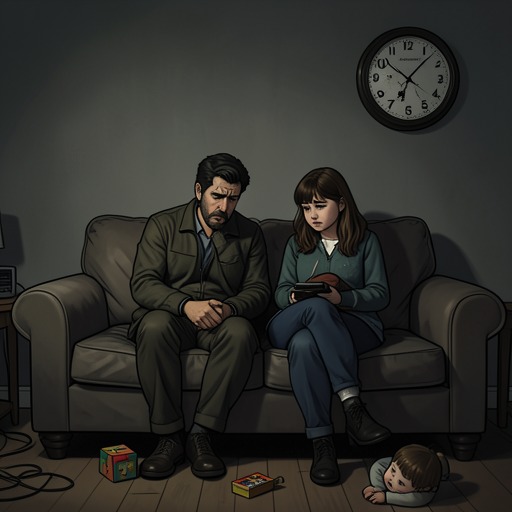
I Heard You Paint HousesFrank Sheeran—Mary Leddy Sheeran is the story of a marriage that began with Sheeran trying to impress a young woman in a crowd and ended, in his account, with his departure from family life into the downtown world of the Teamsters and organized crime. Mary built a home and raised their daughters; Sheeran later recognized that his weekly cash contributions did not replace his presence, and called leaving his wife and children the worst mistake of his life.
Meeting and Courtship
Sheeran first noticed Mary Leddy at a boxing exhibition where he was put into the ring against a trained kangaroo wearing boxing gloves. He was focused on showing off for the pretty Irish girl in the third row, who laughed with the crowd as the kangaroo’s tail repeatedly struck him. He had seen her around the neighborhood but had never spoken to her. After the fight ended in a brawl with the referee and Sheeran was released from the city jail, he went straight to Mary’s house and asked her out.
Their first date was to hear Erskine Hawkins’s big band at the Earl Theater. Sheeran remembered the evening as joyful and said he was respectful because Mary was a strict Catholic. He admired her dark-brown hair and Irish face, and her dancing; by the end of the date, he had decided she was the woman he wanted to marry. He described himself as ready to settle down after years of roaming, though his later conduct would test that intention.
Mary’s family did not welcome him. Sheeran recalled that they regarded him as shanty Irish, in contrast to what he called their lace-curtain Irish identity, and thought they may also have found him too unpredictable. Their disapproval did not prevent the marriage. Mary went to church every Sunday, and Sheeran went with her; in 1947 they married at Mother of Sorrows Church, the church from which he had once been dismissed as an altar boy for drinking the wine.
Building a Household
The couple began married life in Mary’s parents’ home because they could not afford a place of their own. At the wedding reception there, Sheeran had been drinking and announced that he would return the gifts from Mary’s side of the family because he felt unwanted by them. He later connected such hair-trigger behavior to his wartime experience. Early domestic life also carried the strain of money and his volatility: still without steady employment, he borrowed one hundred dollars from each of four finance companies to pay for the wedding and evaded the collectors. When one supervisor tracked him to Wagner’s, Sheeran led him to the bathroom and struck him, making clear that he did not intend to speak with the collector.
Mary worked as a secretary at the Philadelphia College of Pharmacy. When Sheeran had a steady paycheck and a baby was on the way, she was able to leave that job, and they rented a house in Upper Darby. Their arrangement with the landlady included paying half the rent in exchange for Mary caring for the landlady’s daughter during the day. Their first child, Mary Ann, was born on Mary’s birthday. Sheeran described the birth as a powerful moment and vowed to earn as much as he could for his family. The family held Mary Ann’s christening at home, with Sheeran’s friend Dusty Wilkinson attending—an unusual sight in Philadelphia in 1948, as the book notes.
A steady union job driving a truck for Food Fair gave Sheeran reliable work for ten years. The account presents this as financial support for the household, though it does not make that support a substitute for shared family life. Mary and Sheeran had three daughters; their third, Dolores, was born in 1955. Mary continued to attend church, take the children to their own Mass, go to novenas, and ensure they received the sacraments. Sheeran called her a terrific mother and said that she showed the girls affection, something he found difficult because he had not received affection as a child. He credited Mary, rather than his own involvement, with raising the daughters and their good behavior.
Family Life and Growing Absence
Sheeran’s memories include ordinary family outings alongside signs of his divided attention. He sometimes took his second daughter, Peggy, to Johnny Monk’s club, while Mary Ann preferred to stay home with Mary and the new baby. Mary arranged picnics and trips to Willow Grove Amusement Park. Sheeran said he had been close to Peggy, but that she no longer spoke to him after Jimmy Hoffa disappeared—a later consequence of the criminal world that increasingly displaced his family relationships.
The turning point came as Sheeran spent more time with Italian drivers from Food Fair, going downtown to bars and restaurants frequented by people from a different social world. He later admitted that he became neglectful and stopped coming home, even though he brought cash to Mary every week. In his own retrospective judgment, he had confused providing money with being a husband and father: if he did well financially, he thought Mary did well, while he failed to give his wife enough time or his children enough family life. He characterized himself harshly for that selfishness rather than claiming that his payments compensated for his absence.
Departure and Retrospective Judgment
Sheeran’s movement into the downtown culture became decisive after he dealt with Whispers. Looking back on the twenty-four hours between meeting Angelo and Russell and meeting Angelo again after the sidewalk incident, he described it as becoming easier not to go home—or harder to return. He then stated plainly that he stopped going home. The change was more than a shift in his social circle: he stopped Saturday confession and Sunday church with Mary, and said that everything was different once he had crossed into the new culture.
He rented a room around the corner from Skinny Razor’s and moved his clothes there. He still went to the Teamsters hall for truck work and kept his ballroom jobs, but downtown began supplying him with more work; he described himself as now running and belonging to that culture. In the 1960s he married Irene and had a fourth daughter, Connie. Sheeran contrasted that period with the years of neglect: by then he was older, had steady money through his association with Hoffa and the Teamsters, and was home more. The contrast records a change in his circumstances, not a repair of the earlier marriage. His account gives Mary little space to speak in her own voice, while repeatedly making her work as a mother and the cost of his absence central to his retrospective reckoning. He called leaving her and the girls the worst mistake of his life, while acknowledging that there was no good time to abandon a wife and children.